



Mera Peak Climb 2026

Expedition Schedule

  • 16 April – 02 May, 2026
  • 22 April – 09 May, 2026
  • 10 Oct – 27 Oct, 2026
  • 22 Oct – 08 Nov, 2026

Trip Facts

Duration

18 Days

Altitude

6454 M

Accommodation

Hotel/Lodge/Tent

Trip Start From

Kathmandu

Trip Ends At

Kathmandu

Overview

At 6,476 meters (21,247 ft), Mera Peak is officially the highest permitted “trekking peak” in Nepal. Located in the remote Hinku Valley, it offers one of the most spectacular viewpoints in the world, with a summit panorama that includes five of the earth’s six highest mountains.

The Climbing Experience

Mera Peak is renowned for being physically demanding but technically straightforward. It is the ideal choice for those looking to break the 6,000-meter barrier without needing advanced technical mountaineering skills.

  • The Approach: The journey takes you through the pristine and less-crowded Hinku Valley, passing through lush rhododendron forests and high alpine pastures before reaching the glaciated terrain.
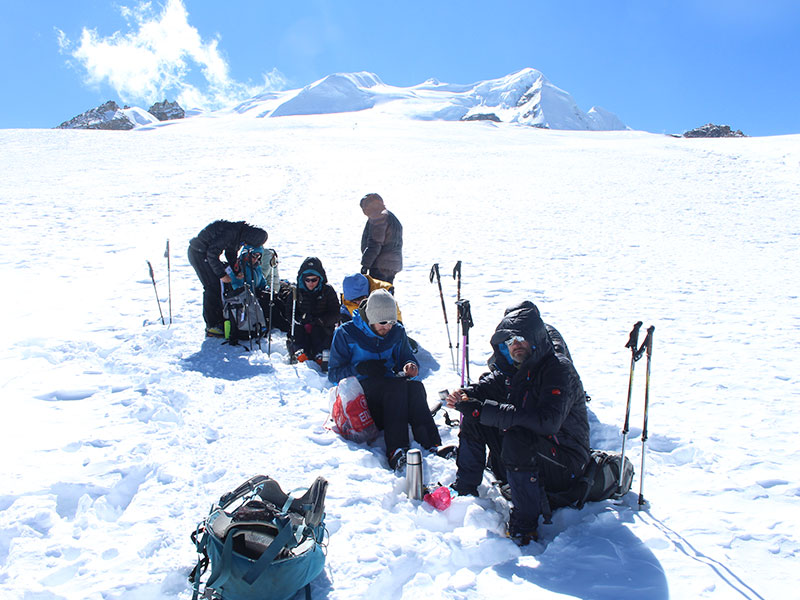
  • The Ascent: The climb is primarily a high-altitude glacier trek. While the slopes are generally gentle, the thin air at nearly 6,500m makes every step a test of endurance.
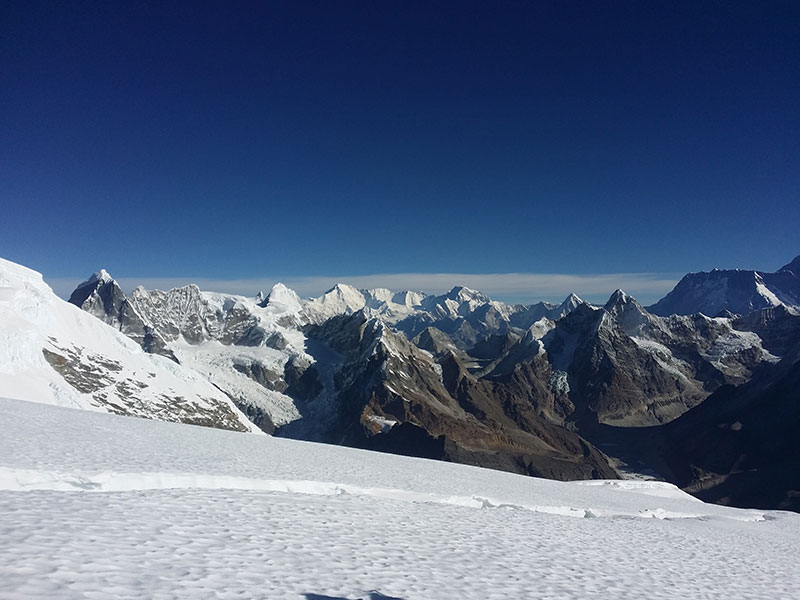
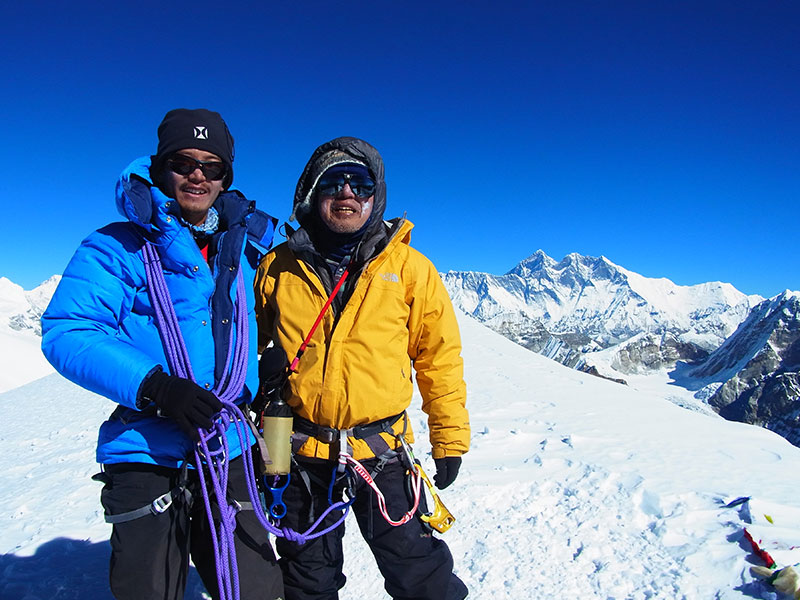
  • The Summit Panorama: The reward at the top is unparalleled. You will see Mount Everest (8,848m), Lhotse (8,516m), Cho Oyu (8,201m), Makalu (8,485m), and Kanchenjunga (8,586m) all in a single sweep.

Technical Details & Difficulty

Mera Peak is graded PD (Peu Difficile) on the Alpine scale. While not “technical” in the sense of vertical climbing, its extreme altitude and cold require serious preparation.

Technical Requirements: * Basic use of crampons and an ice axe for glacier travel.

Experience with “walking in a rope team” for crevasse safety.

The final 30-40 meters to the summit can involve a steep snow slope (approx. 40 degrees) where a fixed rope and ascender (Jumar) may be used for safety.

Summit Day: A long and cold day, typically starting at 2:00 AM from High Camp (5,800m), taking 5–7 hours to reach the summit.

Physical Fitness: High. Excellent cardiovascular conditioning is the most important factor for success on Mera Peak.

Best Time to Climb

Spring (March to May):
Pros: Warmer temperatures and stable climbing conditions. The ascent is often more comfortable, though there may be more snow on the trail.

Autumn (October to November):
Pros: The most stable weather window. Post-monsoon air is incredibly clear, providing the sharpest views of the 8,000m peaks.

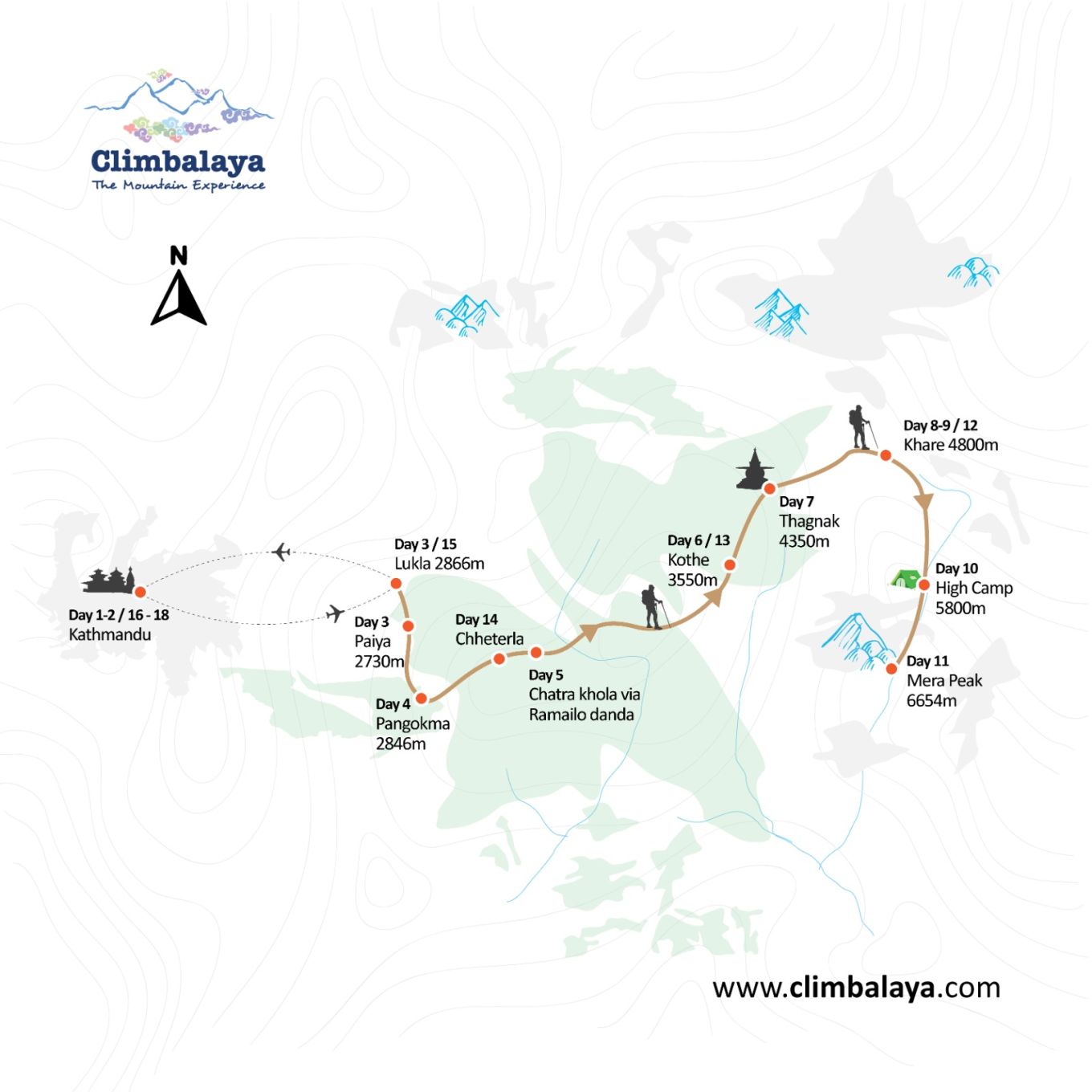
Brief Itinerary

  • Day 01:
    Arrive Kathmandu and transfer to hotel
  • Day 2:
    In Kathmandu for official procedures and preparations
  • Day 3:
    Scheduled flight Kathmandu to Lukla (2866m) via Ramechap airport and trek to Paiya (2730m)
  • Day 04:
    Trek to Pangokma (2846m)
  • Day 05:
    Trek to Chatra khola (3150m) via Ramailo danda
  • Day 06:
    Trek to Kothe (3550m)
  • Day 07:
    Trek to Thagnak (4350m)
  • Day 08:
    Trek to Khare (4800m)
  • Day 09:
    At Khare: Preparations for the climbing
  • Day 10:
    High camp (5800m). Camp
  • Day 11:
    Summit Mera Peak (6654m) and back to Khare
  • Day 12:
    Contingency day for climbing
  • Day 13:
    Trek to Kothe
  • Day 14:
    Trek to Chheterla
  • Day 15:
    Trek to Lukla
  • Day 16:
    Schedule flight: Lukla to Kathmandu and transfer to hotel
  • Day 17:
    In Kathmandu
  • Day 18:
    Departure

Expedition Schedule

  • 16 April – 02 May, 2026
  • 22 April – 09 May, 2026
  • 10 Oct – 27 Oct, 2026
  • 22 Oct – 08 Nov, 2026

Challenging

  • Strenuous trekking and climbing
  • May require carrying bag packs (12)
  • Elevations from 2800m to 5500m
  • Moderate to intermediate terrain with short scrambling and descent on moraine/scree sections
  • Terrain might be snow or ice or rock or all mixed including glaciers
  • Few nights are spent in tent at high altitude during peak ascent
  • Nights are spent in tents or lodge
  • Involves travel in remote areas
  • Trek duration of two to three weeks
  • Includes several high passes trek and 6000m peak ascent
  • Minimum seven hours of average trek per day

Package Details

Cost Includes:

  • All arrival and departure transfers for international and domestic flights.
  • Round-trip flight (Kathmandu–Lukla–Kathmandu) via Ramechap Airport.
  • Hotel accommodation on a twin/double sharing basis with breakfast, as per the itinerary.
  • Standard lodge accommodation on a twin/double sharing basis with three daily meals (breakfast, lunch, and dinner).
  • Services of an experienced, government-licensed trekking/climbing guide and porter support.
  • All wages, accommodation, meals, and comprehensive insurance for guides and porter support.
  • High-altitude tents, cooking equipment, food, fuel, and all necessary climbing gear (ropes, ice screws, etc.)
  • Applicable climbing permit for Mera Peak, national park and local entry fees.
  • All applicable government and local taxes.

Cost Excludes:

  • International airfare to and from Kathmandu.
  • Nepal Tourist Visa fees (can be obtained upon arrival at Tribhuvan International Airport).
  • Lunch and dinner during your stay in Kathmandu.
  • Expenses of a personal nature, including phone calls, laundry, bar bills, and internet access.
  • Alcoholic and non-alcoholic drinks, tea, coffee, snacks between meals ,mineral water, boiled water, hot showers, during the trek.
  • Gratuities for guides, porters, and drivers.
  • Personal travel and medical insurance mandatory to cover medical, hospitalization, and rescue evacuation charges.(; must cover emergency evacuation and high-altitude trek and climbs).
  • Personal trekking and climbing equipment (e.g., sleeping bags, down jackets, trekking poles, etc.).

Trip Inquiry

Choose from our pre-designed itinerary and schedule your preferred departure or discuss with our team to create a customized one.

Dawa Sherpa

+977 9851024885

Mingma Sherpa

+977 9841714888